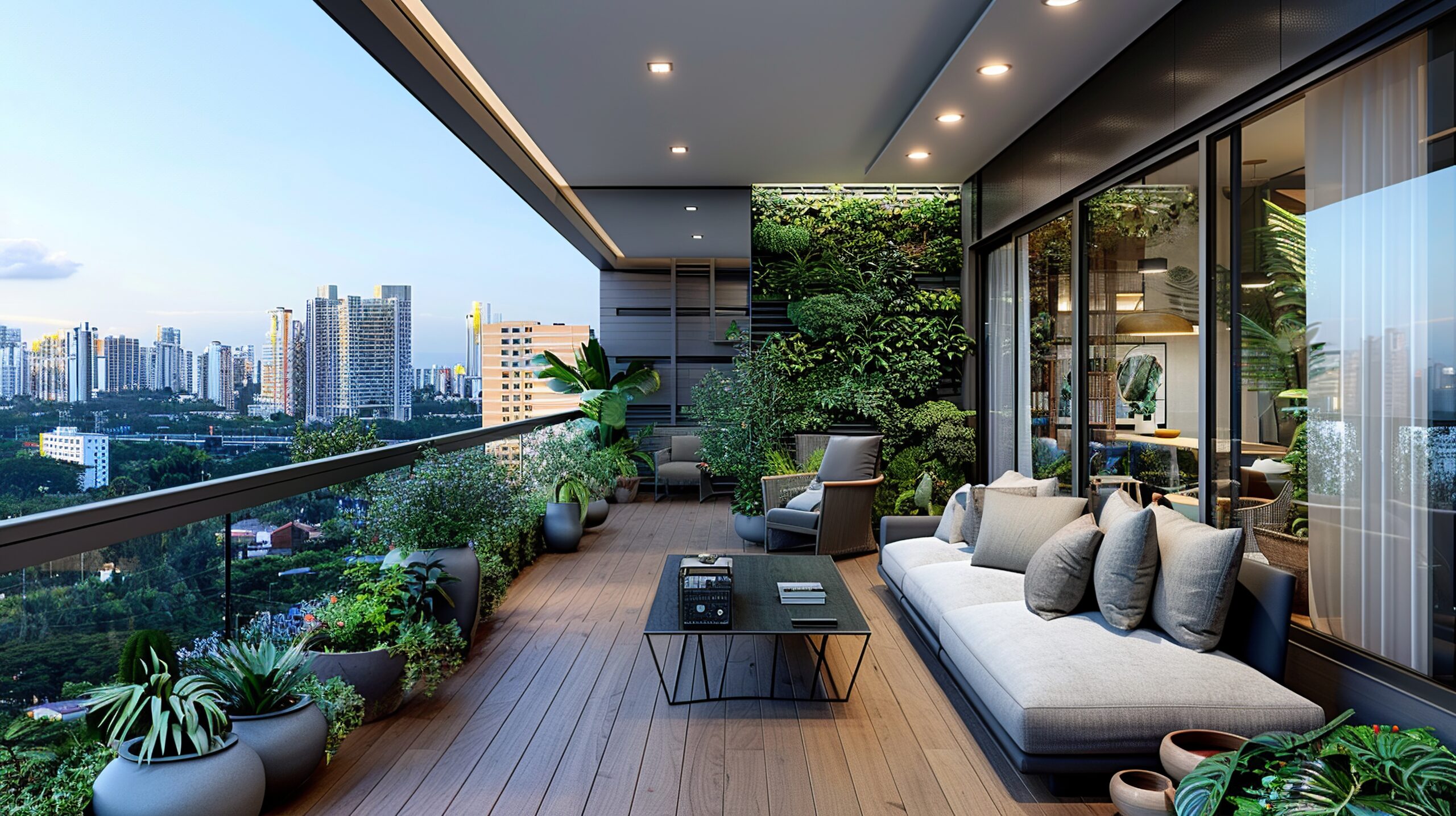
High-rise living is often misunderstood.
For some, it brings to mind shared walls, close neighbours, and constant movement. For others, it represents elevation, exclusivity, and distance from the noise below.
The truth is simple:
Privacy in vertical living is not accidental. It is designed.
And in large-scale, mixed-use developments like R.One, design decisions determine whether a home feels exposed, or effortlessly private.
1. Floor Plate Design: The Foundation of Comfort
The shape and size of a building’s floor plate quietly influence daily life.
A crowded floor with too many units per level often increases shared walls, corridor activity, and proximity between neighbours. In contrast, a thoughtfully planned floor plate balances density with breathing room.
Wider layouts, strategic unit spacing, and controlled circulation reduce unnecessary interaction and noise spillover.
Privacy, in high-rise buildings, begins here, long before you step inside your home.
2. Core Placement: Where the Lifts and Staircases Matter
Vertical circulation is one of the most overlooked elements in residential comfort.
When lift cores are centrally and intelligently placed, they reduce corridor lengths and prevent excessive foot traffic near apartment doors. Separate cores for commercial and residential zones, especially in mixed-use developments, become even more critical.
In integrated ecosystems like R.One, this separation ensures that residential calm is not compromised by commercial activity below.
Design protects experience.
3. Unit Orientation: Facing the Right Direction
Where your home faces matters more than most people realise.
Direct window-to-window alignment between towers can reduce privacy instantly. On the other hand, angled placements, thoughtful spacing between structures, and orientation toward open views preserve visual comfort.
Good orientation means:
- Less direct overlook from neighbouring units
- More open skyline exposure
- Reduced psychological density
Vertical height already creates distance from the street. Smart orientation ensures you also feel distance from unwanted visual intrusion.
4. Vertical Zoning: Separating Energy Levels
In mixed-use developments, zoning becomes crucial.
Commercial spaces are vibrant, dynamic, and active. Residential spaces demand calm, predictability, and retreat. When both exist within one address, thoughtful vertical and horizontal zoning ensures they support, not disrupt, each other.
Dedicated entrances, separate access points, and defined movement flows are what transform mixed-use from chaotic to cohesive.
Privacy is not about isolation. It is about intelligent separation.
5. Sound, Light, and Structural Detailing
True privacy extends beyond what you see.
Acoustic insulation, material choices, slab thickness, and facade detailing influence how much external noise filters into your home.
Similarly, controlled glazing and facade design prevent excessive transparency while still allowing light.
These are invisible layers, but they define how private your home feels years after possession.
So, Is Privacy in Vertical Living a Myth?
Not at all.
It becomes a myth only when design is secondary to density.
In landmark mixed-use developments like R.One, privacy is not treated as an afterthought. It is embedded in:
- Planning logic
- Zoning strategy
- Orientation
- Circulation design
- Structural detailing
Because modern urban living demands both connection and retreat.
The city can stay vibrant.
Your home should still feel personal.
And in vertical living, that balance is never accidental.