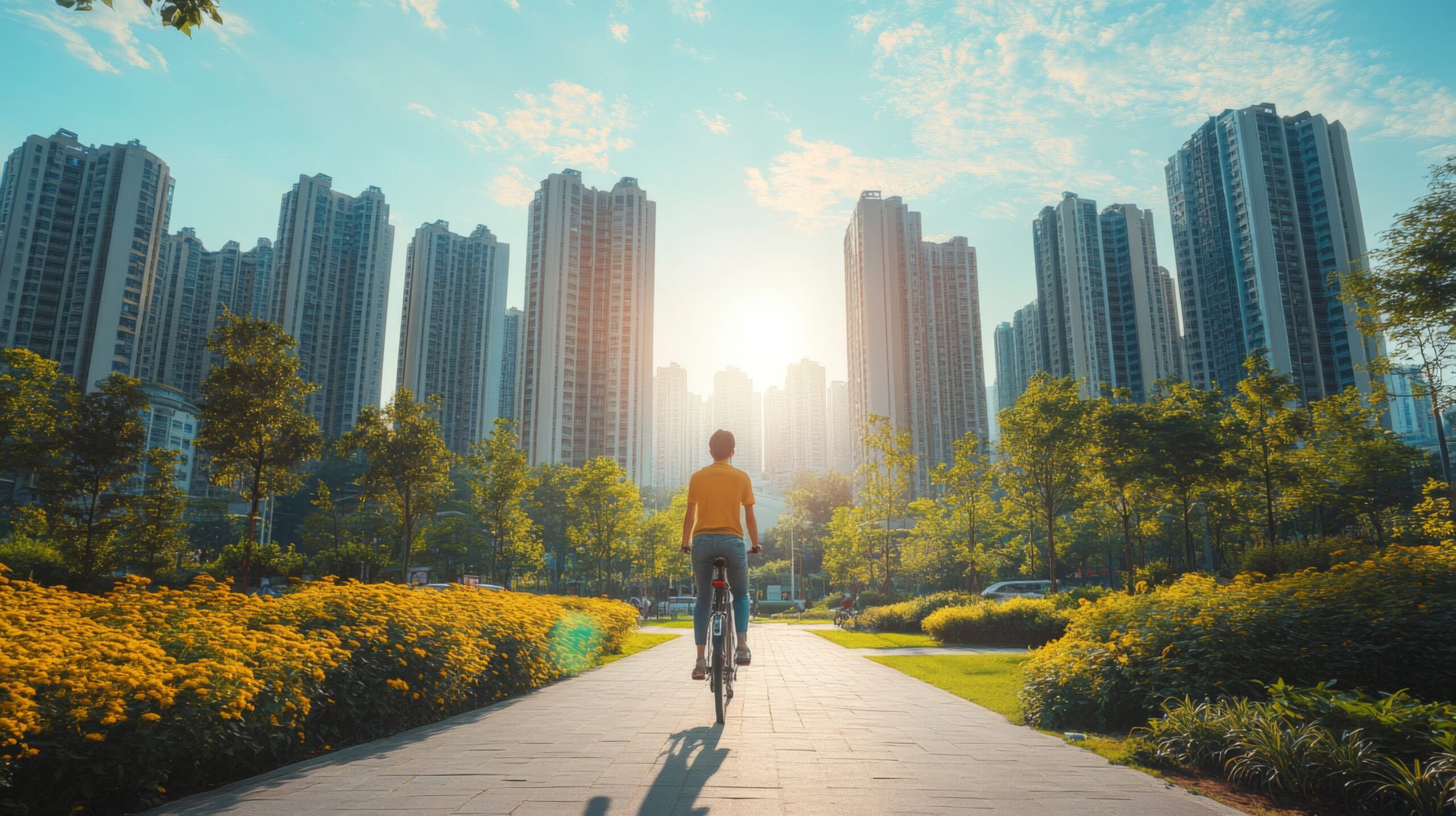
Cities are designed to move fast.
Traffic flows, deadlines stack up, skylines expand. When you live in a city, you often spend your days reacting to it, adjusting your pace, your patience, your energy to match its speed.
But living with a city is something else entirely.
It begins with space, not distance, but breathing room.
When the City Leaves You Some Air
Homes that open up to greenery, sky, and open views change how urban life feels. The city is still there, active, ambitious, alive, but it no longer presses in on you. Trees soften the noise. Open views replace visual clutter. The mind relaxes without needing an escape plan.
You don’t step away from the city. You coexist with it.
Green Isn’t Just Visual, It’s Emotional
Access to landscaped spaces, gardens, or even distant green views has a quiet effect on daily life. It slows thoughts. Grounds emotions. Makes pauses feel natural instead of forced. A few minutes near greenery can reset an entire day, something concrete rarely manages to do.
This isn’t about luxury. It’s about balance.
Open Views Change Perspective
Living with open horizons, whether it’s sky, water, or layered cityscapes, creates a sense of openness inside the home as well. Spaces feel less boxed in. Even busy days feel lighter when your surroundings don’t constantly demand attention.
The city feels expansive, not overwhelming.
Breathable Spaces, Better Days
Thoughtful urban living allows buildings to breathe, through better ventilation, spacing, and orientation. Fresh air moves through homes. Light enters without strain. You feel more alert, calmer, and less fatigued, even after long days.
These details don’t announce themselves. You notice them in how easily you unwind.
Convenience Without Compromise
Living with the city doesn’t mean giving up access. Workplaces, social hubs, schools, and essentials remain close, but they no longer define your entire experience. Your home becomes a pause point rather than a pit stop.
You engage with the city when you want to, and retreat when you don’t.
In rapidly growing cities, the future of urban living isn’t about choosing between nature and convenience. It’s about designing homes that allow both to exist together. Because the real evolution isn’t in expanding cities, it’s in how thoughtfully we learn to live alongside them.